Being at the Richmond House School for a couple of months has made me realise that maybe the school curriculum and values and ethos are slightly different to the proposed theory in terms of Long-Term Athlete Development Model (Balyi & Hamilton, 2004). It suggests that the participants that I am currently coaching are exiting the fundamentals stage of physical literacy and entering the learning to train section of the model. This is for boys aged 9-12 years (Balyi & Hamilton, 2004), which is the age range of the participants I am coaching.
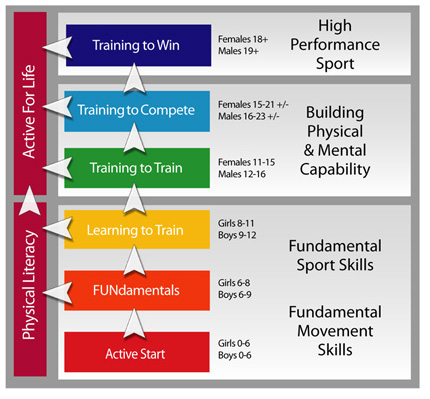
I have come to study the fact that the P.E Coordinators are coaching the participants well above the idea of the LTAD Model (Balyi & Hamilton, 2004), they’re learning to train to compete as they are always focusing on upcoming fixtures and they sacrifice P.E lessons for away and home fixtures at any chance thy can get. It’s an observation I have made quite barely on into my time at the school and would like to try and cut back to the theory to try and plan my sessions to the appropriate stage of the athletes development. “Basic locomotor skills (walking, running, jumping) are fundamental to sports performance and form the basis from which more complex skills are acquired, through development of strength, balance, co-ordination and speed”. (Cratty 1986). I took to this research to develop my own session plans to try and coach them to the research that I found and what was thought to benefit them the most.
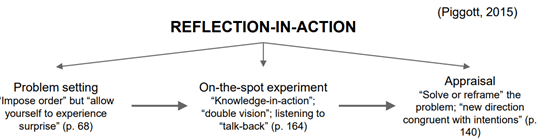
I used the reflection-in-action (Piggott, 2015) theory to develop a way to improve this problem. I started out by identifying the problem by observing what was going wrong by having a clear expedition of what was suppose to be happening. I then tried out a new session which was cut back by the theory to train and teach the participants the sport specific skills (Balyi & Hamilton, 2004), recommended in the physical literacy. I then move to the appraisal side of the Reflection-in-action model where i can look at the changes i made and see if they have worked by going into new sessions and see the physical improvement of the participants.
 Scott Turner - Sport Coaching Blog
Leave a comment