When I first turned up at the placement, I identified after an observation of the session that there were two individuals that may have had learning difficulties. So, I took it upon myself and went to their teacher to enquire more, the feedback from their teacher was that the two participants both had autism and were brothers. This is when I stared to research into how to improve this problem by using the double loop learning model (Argyris & Schon, 1978). I looked at the governing values and ideas of conducting sessions that involve disability students and found that “sport should be grouped by ability or disability” (Fitzgerald, H. and Long, J., 2017).
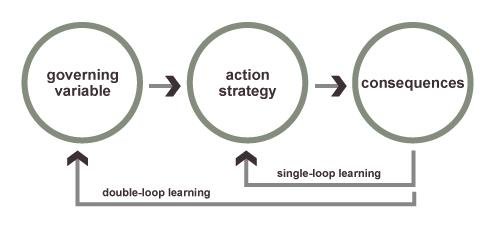
I then implemented that into a session plan with an idea of that I am going to include this type of theory to coach, I then put that to action to see if what I researched was true and if it worked. I then tracked back to theory to look at if there was more, I could do and if I was doing it right, so I looked in deeper for the next session. I proceeded to research further and found The Inclusion Spectrum Framework (Stevenson & Black, 2011). This suggested that “everyone can play” (Stevenson & Black, 2011) which was open learning and also the “change to include” part of the framework which leads to the STEP Model (Stevenson & Black, 2011).
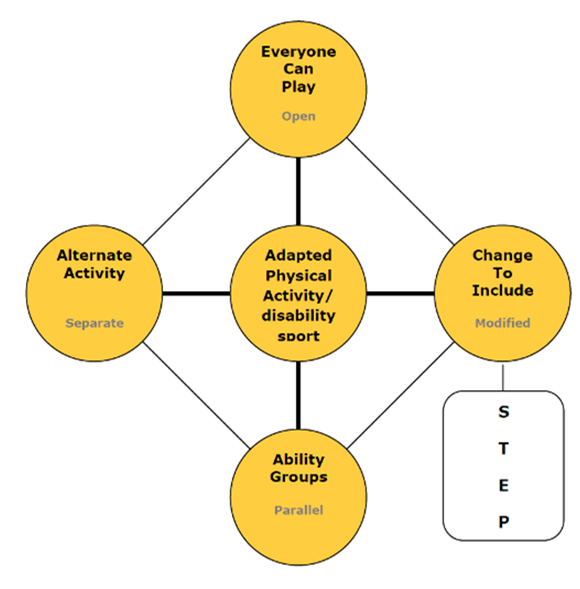
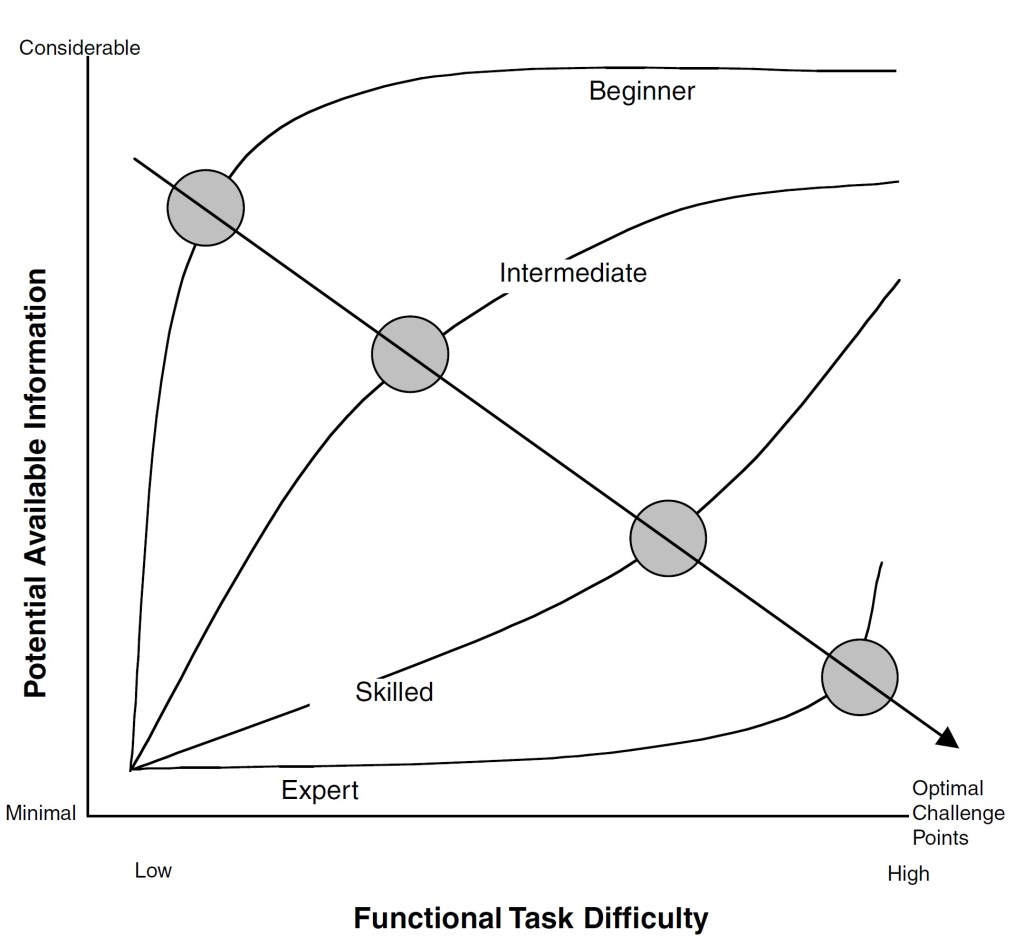
When putting that into action I had to take into consideration the space, task, equipment and people to make the session more suitable for all participants so the space can either be made larger or smaller or vary the distance to be covered in activities to suit different abilities. The task can be changed by breaking down skills into smaller component parts to help the participant understood more. The Equipment can also be changed to suit different participants by having the use of bells or rattles to enhance the senses or increase or decrease the size of the equipment. Finally the people can be changed into a balanced group therefore conducting Parallel Learning, where the session is split up into two parallel sessions where one group can progress faster than the other depending on their ability and Challenge Point (Mark A. Guadagnoli and Timothy D. Lee, 2004). Then I looked at this theory after I put it into action and realised it was working so I kept implementing this theory into my coaching to keep improving the participants at their own rate.
 Scott Turner - Sport Coaching Blog
Leave a comment